Two Names on the Beat, Half the Money in Your Pocket: The Real Cost of Shared Producer Credits
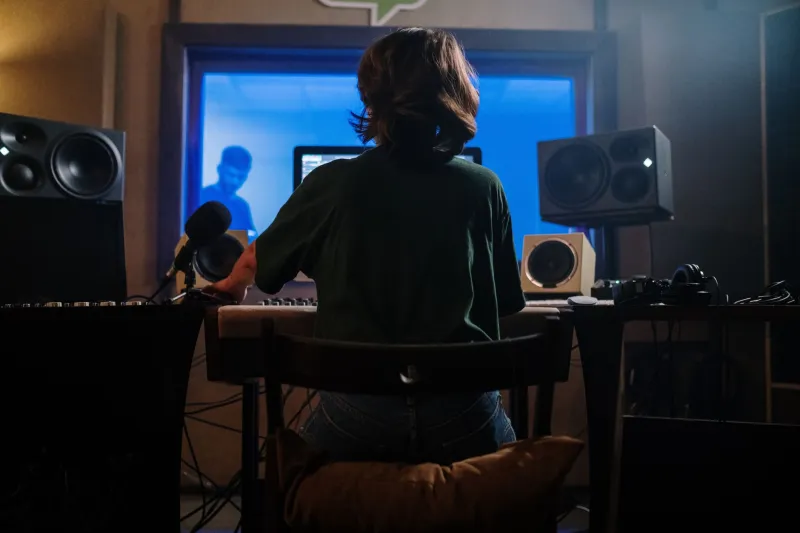
There's a moment every producer knows. You're in the session, vibes are right, your homie drops a melody on top of your drums, and suddenly the beat transforms into something neither of you could've made alone. It feels like magic. What nobody tells you is that magic has a price tag — and that price gets paid out of your catalog's future earnings for years to come.
Split producer credits are everywhere right now. Co-production is practically the default mode for a generation of beatmakers raised on collaborative platforms and shared sample packs. But the business reality underneath all that creative energy is a lot messier than a handshake and a 50/50 agreement scribbled in your notes app.
What a Split Credit Actually Means Legally
When two or more producers share a beat credit, they're typically creating what's called a joint work under US copyright law. That sounds straightforward, but the implications run deep. Each co-author of a joint work has the right to license the work non-exclusively without the other party's permission — as long as they account for profits to their co-creator. Translation: your collab partner could technically license your shared beat to a rapper, a brand, or a sync placement, cut you a check for your percentage, and you'd have zero say in whether that deal happened or who it went to.
That's not a hypothetical. It happens constantly in this industry, especially as beats start generating real money.
The more immediate financial hit, though, comes from how split credits affect resale and licensing deals. When a label or music supervisor looks at acquiring a beat catalog or licensing a track for a TV show, film, or commercial, the number of rights holders involved directly affects their appetite for the deal. Every additional name on a beat is another negotiation, another signature needed, another potential veto point. Some music supervisors have informal rules — if a beat has more than two producers attached, it moves down the priority list automatically. Fewer stakeholders means faster clearance, and speed matters enormously in sync licensing.
The Hidden Math Behind Split Agreements
Let's talk numbers, because this is where producers often underestimate what they're actually giving up.
Say you produce a beat that gets placed in a mid-tier Netflix series. Sync licensing fees for that kind of placement can range anywhere from $5,000 to $25,000 for an independent producer depending on usage. If you co-produced that beat 50/50, you're walking away with half of whatever fee gets negotiated. That's fine in isolation. But multiply that across a catalog of 30 beats — half of which have split credits — and you've effectively cut your passive income ceiling in half before a single deal closes.
Now add the complexity of split agreements that weren't properly documented. The number of producer disputes that start with "we never put anything in writing" is staggering. Without a clear co-production agreement outlining ownership percentages, licensing authority, and revenue splits, you're operating on trust alone. And trust doesn't hold up in arbitration.
A solid co-production agreement should cover at minimum: the exact ownership percentage each producer holds, who has authority to license the beat and under what conditions, how sync fees and royalties get divided, what happens if one producer wants to sell their share, and how disputes get resolved. If you're not working with those terms locked in before the session ends, you're building on a foundation that can crack the second real money enters the picture.
When the Collab Is Actually Worth It
None of this means you should never co-produce. That would be a wild overcorrection. Some of the most valuable catalog assets in hip-hop history came from two producers feeding off each other's instincts. The point isn't to avoid collaboration — it's to be intentional about when and how you do it.
Co-production makes the most sense in a few specific scenarios. First, when the other producer brings a genuinely distinct skill set you don't have — a live musician who plays keys, a sound designer who works in formats you don't touch, or an engineer who's also contributing creative elements to the arrangement. If the collaboration is creating something you legitimately couldn't produce solo, the equity sacrifice has a clear justification.
Second, when the co-producer brings access. If your collab partner has a direct line to a placement opportunity, an artist relationship, or a licensing network that wouldn't otherwise be available to you, splitting ownership can be worth the trade-off. You're not just losing equity — you're buying access.
Third, when the beat itself isn't core to your catalog identity. If you're experimenting in a genre outside your lane or building a one-off for a specific project, splitting that credit doesn't dilute the heart of what you're known for.
The scenario where you should almost always go solo? When the collaboration is purely additive — meaning someone's layering elements on top of your foundational work and calling it a co-production. Adding a vocal chop or swapping out a snare doesn't warrant a 50/50 split. Know the difference between a contributor and a co-author.
Protecting Your Catalog Before It's Too Late
If you've already got split credits scattered across your catalog, you're not out of options. The first step is getting every existing co-production agreement documented retroactively if it wasn't at the time. Reach out to your co-producers and get the terms in writing now, before a placement opportunity forces the conversation under pressure.
For beats moving forward, consider a tiered contribution model. Not every collaboration has to be a straight split. If someone contributes a melody over your full production, maybe that's a 70/30 arrangement rather than 50/50. The percentages should reflect actual creative contribution, not just the fact that two people were in the room.
Also worth exploring: keeping your most commercially valuable beats — the ones most likely to attract sync deals or catalog acquisition interest — fully under your own credit. Reserve those for your solo output and use collaborative sessions for B-tier projects or experimental work where the financial stakes are lower.
The Long Game Is a Solo Sport
Here's the thing about catalog value that doesn't get talked about enough in producer circles: it compounds over time, but only if the ownership structure is clean. Producers who build catalogs with clear, uncomplicated rights histories are the ones who eventually get acquisition offers, publishing deals, and passive income streams that actually scale.
Every split credit you sign without thinking it through is a small bet against your own future. Some of those bets pay off. A lot of them just quietly shrink what your catalog is worth to anyone looking to buy in.
Collaboration built this culture. But business built the legacies. Know when to share the board and when to work alone — because in the long run, the credits you keep entirely for yourself might be the most valuable ones you ever make.