Half-Finished and Forgotten: Why Producer-Rapper Projects Die in the Cloud and How to Actually Cross the Finish Line
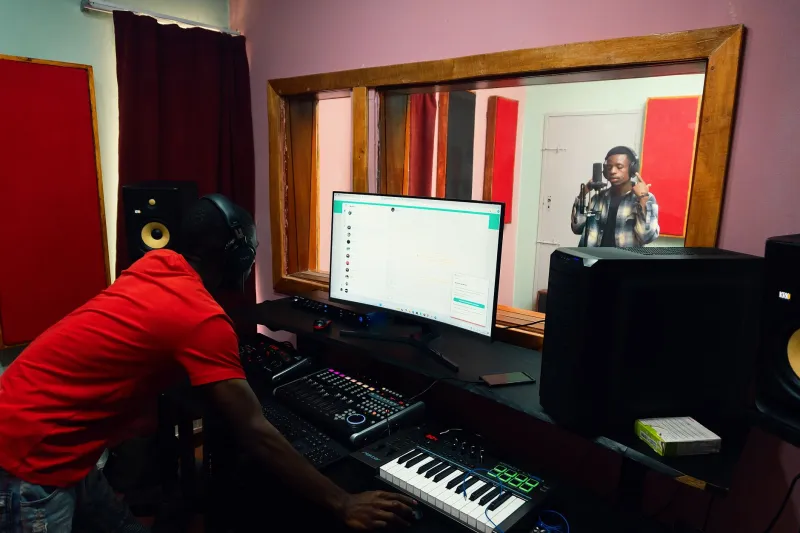
Open up your cloud storage right now. Go ahead. Somewhere in there — tucked between a folder labeled "collab ideas" and a ZIP file you don't remember downloading — there's probably a beat that had real potential. A rapper sent you a voice memo over it. You both agreed it was heat. Then life happened, messages went unanswered, and that track quietly slipped into the void.
You're not alone. Across the production community, the gap between started and finished is enormous. For every track that lands on streaming platforms, there are dozens that never made it past the rough mix stage. The frustrating part? Most of those abandoned projects weren't killed by bad music. They were killed by something far more preventable.
The Real Reasons Projects Go Nowhere
Let's stop blaming creative differences and be honest about what's actually happening. The number one killer of producer-rapper collabs isn't a clash of visions — it's a total absence of expectations.
When two people connect over a beat with zero structure around what happens next, the project is already on borrowed time. Nobody agrees on a timeline. Nobody defines what "done" looks like. One person thinks the collab is casual; the other thinks it's a priority release. Those mismatched assumptions don't surface in the hype of the initial session — they surface six weeks later when one party goes cold and the other is left wondering what went wrong.
Producer Damien "Dmac" Carter from Atlanta put it plainly in a conversation we had recently: "I used to send beats out like I was handing out flyers. No follow-up plan, no agreement, nothing. I had probably forty collabs going at once and finished maybe two of them. The math was never going to work."
The second killer is scope creep disguised as creativity. A project that starts as a six-song EP slowly becomes an album idea, then a concept project, then something with features — and suddenly the finish line has moved so far that nobody can see it anymore. What felt exciting in month one feels overwhelming by month three.
What the Producers Who Actually Finish Are Doing
Here's the thing: there are producers out there with release rates that would make most of their peers' jaws drop. They're not more talented or more connected. They just operate with systems that the average producer ignores.
They start with a simple written agreement. It doesn't have to be a legal document drafted by an entertainment attorney — though that's ideal for bigger projects. Even a short email or shared Google Doc that outlines ownership splits, release timelines, and each person's responsibilities makes a measurable difference. Chicago-based producer Lena Voss, who has co-produced tracks for several independent Chicago rappers with strong Spotify numbers, swears by what she calls a "collab brief." It's a one-page document she fills out with every new collaborator before a single file gets shared. "It sounds corporate, but it actually makes things feel more real to both parties. People take it seriously when there's something written down."
They build in milestone checkpoints. Rather than treating a project as one giant undefined task, producers who finish break things into stages with actual deadlines attached. Beat selection by a certain date. Reference vocals in by another. Final lyrics locked two weeks after that. When a milestone gets missed, it triggers a conversation — not silence. This approach keeps momentum alive and surfaces problems before they become project-ending.
They limit active collabs. This one sounds counterintuitive in a culture that rewards hustle and volume, but the producers with the best completion rates tend to cap how many active projects they're running at once. Dmac went from forty simultaneous collabs to a strict maximum of five. His completion rate jumped dramatically. "Quality of attention matters more than quantity of projects. Five collabs you're locked in on will always outperform forty you're half-checking on."
The Rapper's Side of the Equation
It would be easy to frame this as entirely a producer problem, but rappers carry their share of the responsibility too. One pattern that comes up repeatedly is rappers sitting on completed beats for months because they're waiting for the "right" lyrics — a version of perfectionism that quietly strangles projects.
The fix here is mutual accountability. Some producer-rapper duos have started using shared project management tools — even something as simple as a Trello board or a Notion page — to track the status of every track in real time. When both parties can see that a verse has been "in progress" for three weeks, it creates a natural prompt to address it.
Rapper and songwriter Marcus "Relo" Delgado from Houston described a turning point in his working relationship with his main producer: "We started doing weekly ten-minute check-ins over FaceTime. Not long sessions, just quick updates. That one change finished more songs for us than anything else we tried."
Building a Release Culture Instead of a Storage Culture
Maybe the deepest issue is psychological. A lot of producers and rappers have unconsciously built a storage culture — where creating and saving feels productive, but actually releasing something feels risky. Releasing means judgment. It means the work is officially done and people can react to it.
Shifting that mindset requires treating release as the goal from day one, not an afterthought. That means setting a release date during the initial collab conversation — even a rough one — and working backward from it. It means having a distribution plan sketched out before the mix is finished. It means treating an unfinished project as a problem to solve, not a creative work in progress to romanticize.
The producers and rappers who are consistently building catalogs and growing audiences aren't necessarily the most gifted people in the room. They're the ones who've decided that a finished, imperfect release beats a perfect project that never ships.
A Simple Framework to Start Today
If you've got collabs sitting in limbo right now, here's a no-frills framework to revive them — or at least get clarity on which ones are worth saving:
- Audit your active collabs. List every project you're involved in. Be honest about which ones have genuine momentum.
- Reach out with a deadline. Contact your collaborator and propose a specific next milestone with a date. Their response will tell you everything about whether the project is still alive.
- Write something down. Even a short text thread where both parties agree on ownership and a target release window counts as a starting point.
- Cut your losses deliberately. Some projects aren't worth finishing. Formally shelving something is better than letting it drain your mental energy indefinitely.
The boards you build here on BeatBoard are meant to move — to find voices, to become songs, to actually reach people. Don't let them collect digital dust. The finish line is closer than you think. You just have to build the road to get there.