Done Is Better Than Perfect: How Producers Break Free From the Endless Revision Loop
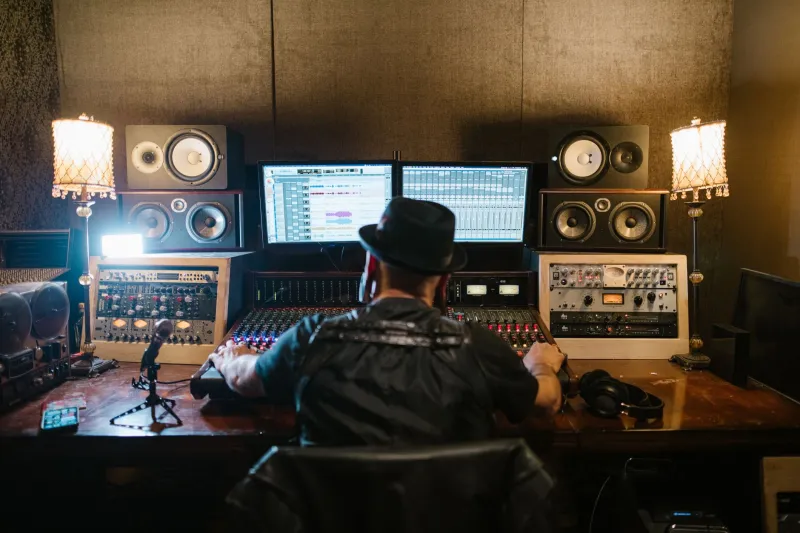
It starts innocently enough. You're deep in a session, the groove is hitting, and something feels almost right. So you pull up the EQ, nudge the low-mids, bounce a new reference mix, and listen again. Then again. Then one more time with fresh ears — except your ears stopped being fresh about two hours ago.
Welcome to the perfectionism trap. It's a place a lot of producers know well, even if they don't talk about it much. You get so locked into chasing the ideal version of a beat that shipping it starts to feel impossible. Days turn into weeks. Folders fill up with versioned exports — beat_final.wav, beat_final_v2.wav, beat_FINAL_THIS_ONE.wav — and somehow, none of them ever make it to a rapper's inbox or a beat store listing.
This isn't just a productivity problem. It's a psychological one, and it's way more common in production culture than anyone wants to admit.
Why Producers Are Especially Vulnerable
Music production sits at this weird intersection of technical craft and pure creative expression. Unlike a painter who can step back and look at the whole canvas, producers are constantly zoomed in — soloing channels, looping eight bars, analyzing waveforms at a microscopic level. The tools literally encourage obsessive focus.
Add to that the fact that DAWs are essentially infinite canvases. There's no physical limit to how many layers you can add, how many plugin chains you can stack, or how many times you can re-record a melody. When everything is always technically editable, it becomes really hard to declare something done.
There's also the comparison factor. Scroll through BeatBoard for five minutes and you'll hear producers whose mixes sound immaculate, whose sound design is next-level, whose arrangements feel effortless. Social media has essentially turned the entire music production community into a highlight reel, and it quietly sets an invisible standard that makes your own work feel perpetually inadequate.
Psychologists call this "counterfactual thinking" — the mental habit of imagining how something could be different or better. For producers, it's almost an occupational hazard.
The Hidden Cost of Holding Back
Here's what nobody tells you when you're on your twelfth revision of a bridge section: perfectionism doesn't protect your reputation. It delays it.
Every beat you don't release is a missed connection — with a rapper who might have built something incredible on it, with a listener who needed exactly that sound, with a licensing opportunity that went to someone who hit send when the track was at 85% instead of waiting for 100%.
Producers who consistently put work out into the world — even imperfect work — build something that perfectionists can't: momentum. They get feedback faster, they develop their ear faster, and they build relationships with artists faster. The learning curve compresses dramatically when you're actually shipping.
There's also the mental health angle. Sitting with unfinished work creates a kind of low-grade creative anxiety that compounds over time. Every "almost done" beat in your folder is a small psychological weight. Multiply that by fifty projects and you've got a creative block that has nothing to do with inspiration and everything to do with accumulated pressure.
What Finishing Actually Looks Like
So how do you know when a beat is genuinely done versus when you're just tired of working on it? That's the real question, and experienced producers tend to have frameworks for answering it.
One approach that works for a lot of producers is the "gut check at first listen" rule. Before you open your session, you play the most recent bounce cold — no looking at the arrangement, no thinking about what's in there. If the emotional response hits in the first eight bars, the beat is working. If you're mentally cataloging problems instead of feeling the music, something needs attention.
Another useful benchmark is the **"rapper test." ** Imagine a specific artist — someone whose taste you respect — hearing this beat for the first time. Would they nod? Would they reach for a pen? If the honest answer is yes, that's usually your green light. The beat doesn't need to be perfect for the right person to hear something in it.
Some producers swear by hard time limits. Give yourself a session — three hours, five hours, whatever your rhythm is — and commit to exporting something at the end of it, regardless of where you are. This isn't about lowering your standards. It's about training yourself to work decisively and trust your instincts under pressure, which is exactly the skill you need when you're on a deadline for a real placement.
Breaking the Loop in Real Time
If you're already stuck in a revision spiral, here are some practical ways to interrupt the pattern:
Change your listening environment. If you've been mixing on studio monitors for three hours, throw it on Bluetooth speakers, earbuds, even your phone's built-in speaker. A different playback context gives you a genuinely fresh perspective and often reveals whether your concerns are real or imagined.
Get a second opinion fast. Send the beat to someone you trust — another producer, a rapper you've worked with, even a non-musician friend — and ask one simple question: does this make you want to move? You're not looking for technical feedback. You're checking the vibe, and outside ears are almost always more honest than your own at this stage.
Name the fear directly. A lot of perfectionism isn't really about the beat — it's about what releasing it means. What if people don't respond? What if a bigger producer hears it and thinks it's weak? Naming that fear out loud (or writing it down) takes away some of its power. The beat isn't the problem. The risk of judgment is, and that's something you're going to have to make peace with eventually anyway.
Create a "done" ritual. Sounds simple, but it works. Some producers export their final bounce, drop it in a specific folder, and immediately move it to their beat store or send it to their email list. The ritual creates a psychological endpoint that makes finishing feel like an action, not a surrender.
Ship the Beat, Trust the Process
The producers who build lasting careers aren't always the ones with the most technically flawless catalogs. They're the ones who stayed in the game long enough to develop, connect, and grow — and that requires actually releasing work consistently.
Perfectionism tells you it's protecting your craft. Most of the time, it's just protecting your ego from the discomfort of being seen. And that's a trade-off that costs way more than a slightly imperfect mix ever would.
Your next beat doesn't need to be your best beat. It just needs to exist in the world. Drop it, learn from it, and build the next one better. That's how legends actually get made — not in endless revision loops, but in the accumulation of real work, real feedback, and real momentum over time.
The board is waiting. Hit export.
